Our Location
304 North Cardinal St.
Dorchester Center, MA 02124

304 North Cardinal St.
Dorchester Center, MA 02124


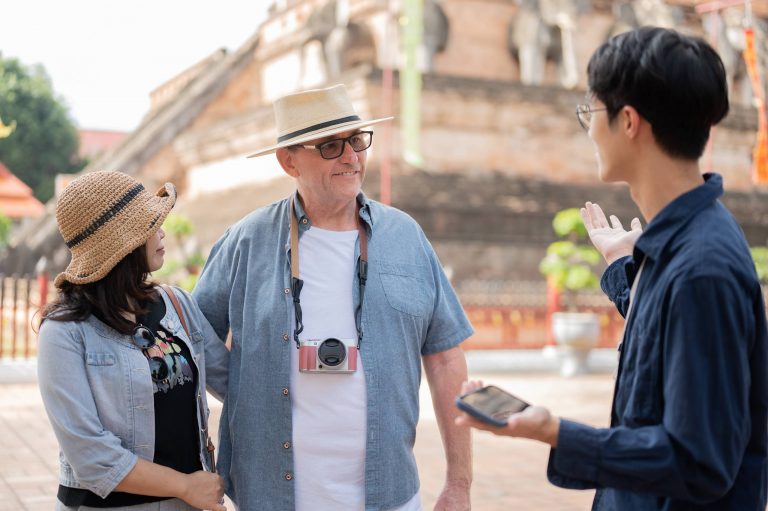
Confidence in tourism is not about learning steps, or memorizing answers. It is about understanding context, seeing a pattern, and knowing how to decide when the scenario is unfolding. Tourism is inherently a dynamic and unpredictable profession, based on the subjective expectations of clients, the objective realities of the outside world, and the time pressures of decision making. Confidence is about not fearing the uncertainty, and knowing how to decide calmly and effectively.
Clearness is a principle of confidence. When you know what you need to do, what your responsibilities are, what the process is, and what the boundaries are, you can act without hesitation. In tourism, clearness means knowing how one part of the service process links with another. It means knowing how to handle the service from the initial contact, to the final follow-up. Knowing the flow of service reduces hesitation and makes for smooth service interactions, where you can act with purpose, rather than hesitate with indecision. Confidence is about knowing, not guessing.
Experience is another principle of confidence. But not just any experience. If you are repeating the same scenarios over and over again, without any reflection or learning, you are not building confidence. You are building habits. You can build bad habits as easily as good ones. The key to building confidence through experience is to look back on the outcome of the event. What worked well? What didn’t? Why did certain decisions produce better outcomes than others? Reflective practice is how you turn your everyday service scenarios into learning experiences, and build up your internal framework for decision making.
Communication is a final principle of confidence. Most often, confidence is expressed in communication. You need to explain, to assure, to negotiate, and to problem solve. When you can communicate clearly and calmly, you can manage the expectations of your clients, and prevent problems from growing into crises. When you communicate with structure and purpose, you establish authority and trust. This does not mean dominating the conversation, or exerting rigid control. It means being able to structure a conversation to a purposeful conclusion.
What is confidence in tourism? It is not about looking like you know what you are doing, all the time. It is about knowing how to respond when you don’t know what to do. It is about expressing that confidence quietly, consistently, and calmly, based on your growing understanding. It is about being able to cope with complex scenarios, to adjust to changing circumstances, and to consistently deliver a high quality experience, every time.